Kimia is an AI-powered platform that helps chemical companies streamline R&D, sales enablement, and product management by giving teams faster access to internal data, documents, and formulations through an intelligent search interface.
As the sole designer from day one, I led the end-to-end design process.

Responsibilities
Conducting UX research and user interviews
Translating business goals into product features and flows
Creating wireframes, prototypes, and a scalable design system
Analyzing user behavior through PostHog to inform design iterations
Redesigning the entire dashboard experience with a modern, modular layout
Building a custom design system from scratch tailored to enterprise data and AI workflows

Problem Statement
Kimia's users, professionals aged 30 to 60 in the B2B chemical sector, needed a way to navigate complex product data, documents, and catalogs efficiently.
Key UX and product challenges included:
Building trust in AI-generated results for high-stakes business decisions
Designing actions on product data and documents with meaningful AI insights
Simplifying the AI chat and search experience to help users access results faster and more reliably
Creating intuitive workflows that reflect real-world R&D, product, and sales scenarios
Balancing advanced functionality with usability across a diverse B2B audience
Research & Discovery
To understand the needs of our users, I conducted 1-on-1 usability sessions and interviews with around 50 users across several large-scale client companies.
Research process highlights:
Scheduled interviews with 2–5 people per company across roles (R&D, data admin, product, sales)
Facilitated task-based usability sessions on real product flows
Collected live feedback, questions, and suggestions for new features
Screen-recorded every session and compiled documentation of pain points
Translated insights into actionable design improvements and feature ideas shared with engineering and leadership
Key insight: Trust, transparency, and simplicity were critical to user adoption of AI functionality.
Primary User Persona: B2B professionals aged 30–60 in chemical enterprises, including R&D managers, product portfolio leads, and technical sales specialists who rely on accurate data and AI insights for daily decisions.

Design & Solutions
I designed Kimia’s experience from the ground up, focusing on usability, clarity, and modular design across key workflows.
Core features:
AI Search Hub: Conversational interface for data lookup, powered by NLP, with quick actions and filters
AI-Powered Document Generator: Created regulatory or marketing documents from existing product data
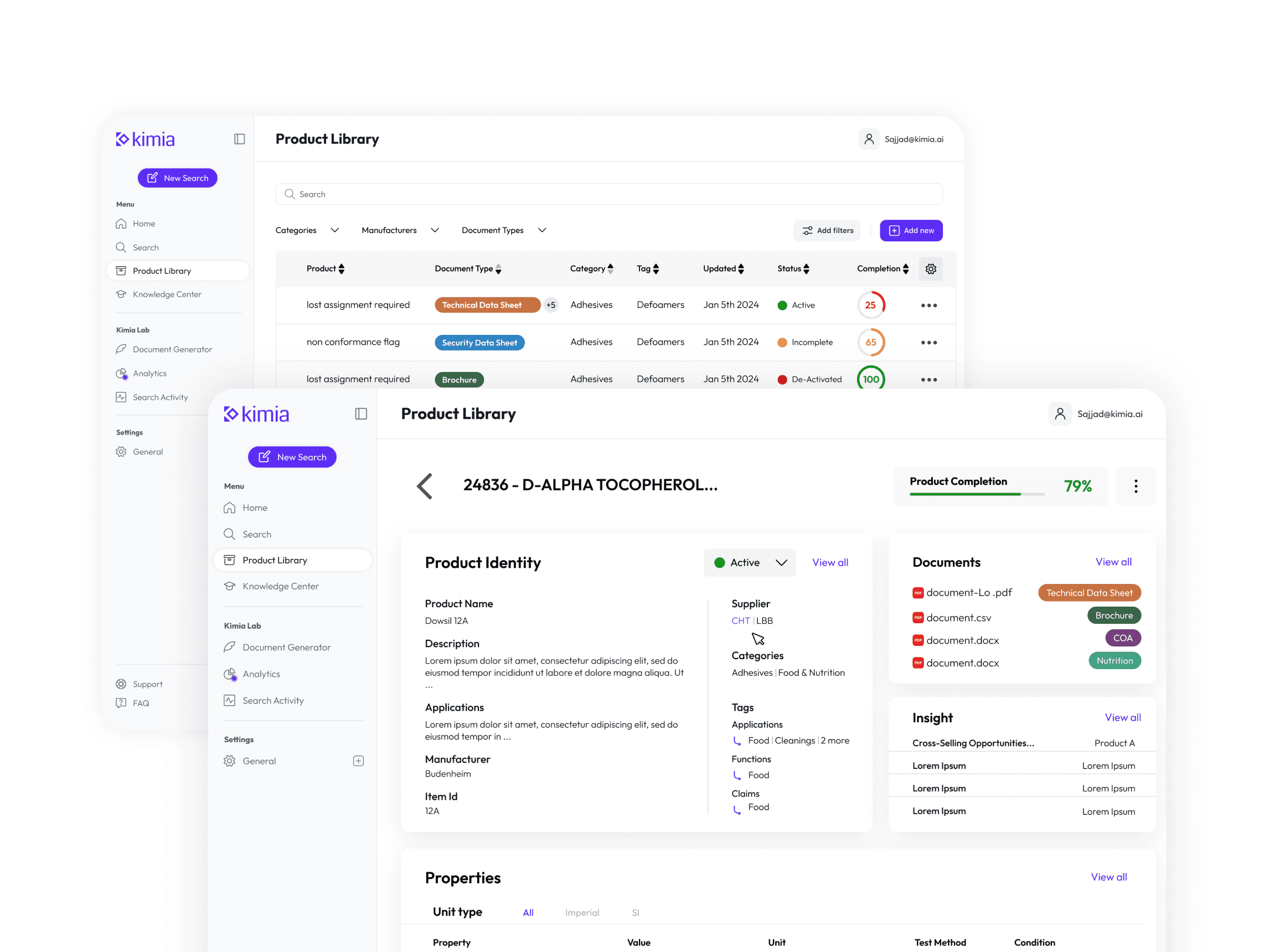
Product & Document Management: Designed full CRUD flows to onboard and maintain internal product libraries
Search Activity Insights: Let admins monitor user queries, understand unmet needs, and identify product data issues
Product Completion Score: Gamified data quality metric to help admins track, improve, and complete product entries
Analysis Module: Dashboard for platform usage insights, helping customers evaluate adoption and data effectiveness
Redesigned Dashboard: Completely overhauled the original dashboard UI for clarity and modularity, improving UX and scalability
Additionally, I created a custom design system in Figma to unify UI components and scale design across features.

Results & Impact
We iterated on every feature based on real-time user feedback. Once validated through usability sessions and satisfaction metrics, each feature was rolled out to customer environments.
📈 +27% increase in AI Search usage post-redesign
🧾 Helped secure a new customer through the Document Generator feature
🔄 Redesigned Search Activity into a multi-action insights tool based on feedback
🎯 40% increase in admin activity after introducing the Product Completion Score
These improvements significantly enhanced platform usability, increased trust in AI-powered workflows, and helped users manage and complete their data more confidently.


Additional Insights & Learnings
AI features in B2B require extra layers of explanation, affordance, and user control to build trust.
B2B personas often juggle multiple roles; the UI must scale flexibly to accommodate that.
Small touches like completion gamification, actionable insights, and smart defaults significantly improved adoption.
Kimia was not just a design challenge — it was a partnership with engineering, AI experts, and chemical industry professionals to bring clarity, trust, and usability to one of the most complex data domains.